Letters, credit, and trust on the Silk Road
The Silk Road was never one road, and for most of its history it had no single name. UNESCO notes that the name Die Seidenstrasse was coined by the German geologist Ferdinand von Richthofen in the mid-nineteenth century. In practice, UNESCO explains, most caravans covered only specific sections of the routes, resting, resupplying, or selling their cargo at points along the way.
That raises a practical sales question. If goods passed through many hands across thousands of miles, how did merchants keep track of money, partners, and promises? One of the best answers we have is a bag of letters that never arrived.
A lost postbag
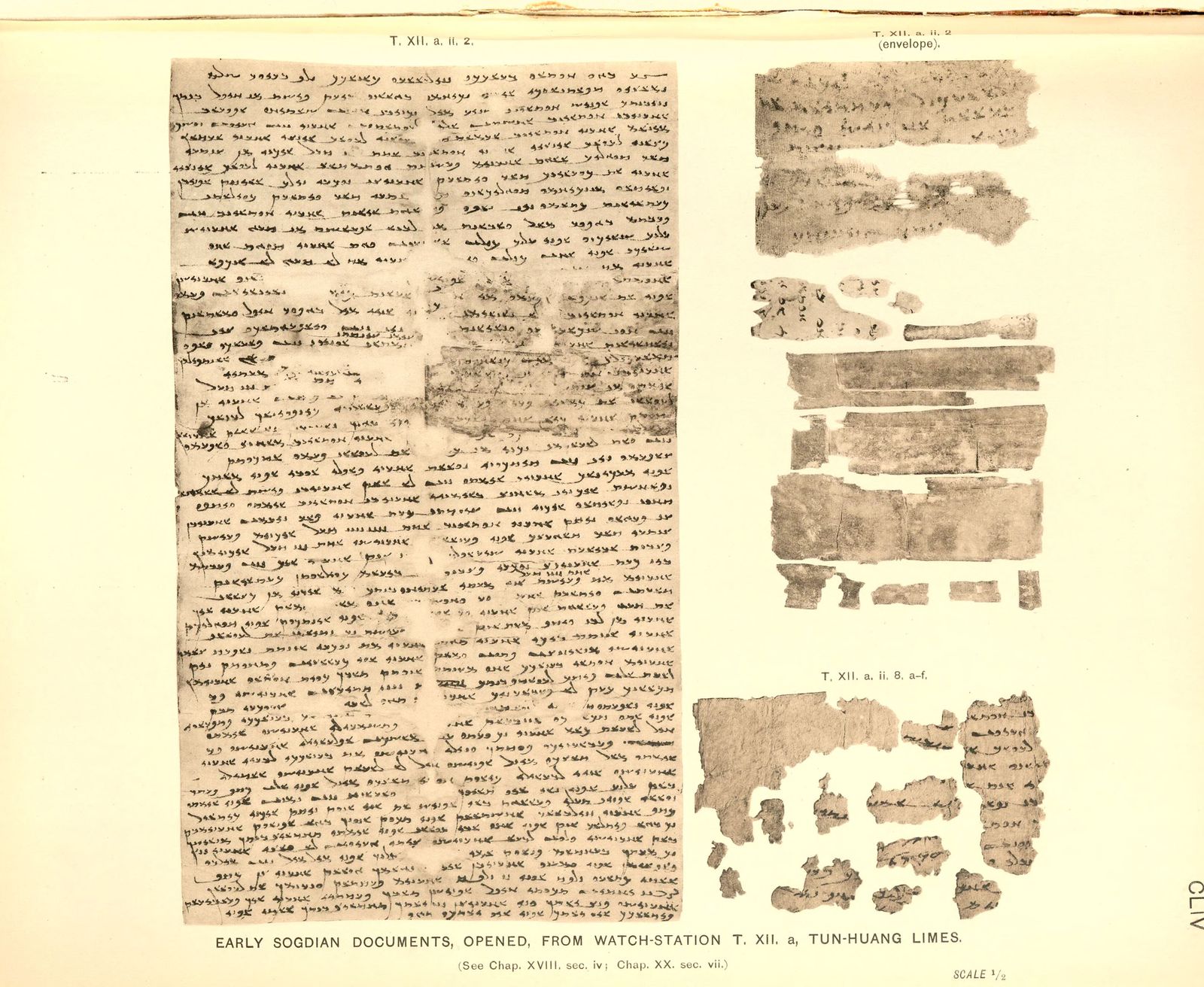
In 1907 the archaeologist Aurel Stein found a group of paper letters in a Chinese watchtower west of Dunhuang, on the defensive wall guarding China’s western approaches. They are written in Sogdian, the language of Sogdiana, the region around Samarkand. Nicholas Sims-Williams, who translated them, describes them as “the contents of a postbag lost in transit,” perhaps confiscated by the Chinese authorities. They are held by the British Library, which dates them to 313–314 CE, and are catalogued by the International Dunhuang Programme.
The letters are not a merchant’s manual. They are working mail. That is what makes them useful.
What was for sale
The goods named include silver, linen and a kind of unprocessed cloth, musk, pepper, and “white,” probably white lead used in cosmetics and drugs. Daniel Waugh’s introduction to the translations observes that the quantities look fairly small and that the trade focused on goods with high value for their weight. That is a sensible rule for any trader who has to move stock over mountains and desert.
Letter 5, written from Guzang (modern Wuwei), lists stock waiting for dispatch: four bundles of “white” and a large quantity of pepper. The writer, Fri-khwataw, also reports the problem: no caravan was leaving. Inventory is only worth something if it can reach a buyer.
Credit, deposits, and interest
Letter 2 is from Nanai-vandak, an agent probably based in Jincheng (modern Lanzhou), to partners in Samarkand, which Sims-Williams puts more than 2,000 miles away. Besides news, it contains financial instructions. He had money on deposit at home. He asks his partners to count it, add the interest to the capital, and record it in a transfer document. If they decided the current holder should not keep it, they should give it to someone they thought fit, “so that this money may thereby become more.” He also asks that 32 vesicles of musk be divided into five shares among named people.
Long-distance trade here rests on written instructions, named counterparties, and partners trusted to act at a distance.
Checking the payment
Letter 5 also records a short payment. A man named Kharstrang reportedly owed the addressee twenty staters of silver. Fri-khwataw weighed what he was handed and found only four and a half. He asked why, wrote down the explanation he was given, and passed the whole account on to his chief merchant. He also complained that his trading partner, Ghawtus, had left him behind.
What still translates
Three habits in these letters still apply to selling today.
Write it down. Amounts, goods, names, and what was agreed. The letters survive because someone put the deal on paper.
Verify before you accept. Fri-khwataw weighed the silver instead of trusting the count. Confirm the order, the price, and the payment before you treat the deal as done.
Send news, not just goods. Nanai-vandak reported on the cloth trade between Dunhuang and Jincheng and told his partners that Luoyang had been sacked. Useful market information is part of what keeps a trading relationship valuable.
The postbag never reached its readers. Seventeen centuries later it still shows that trust in trade was built from records, checks, and steady communication.
Want a credential people can check?
SalesCredential is an 8-module professional selling course with a 30-question exam, a unique credential ID, and 2 years of public verification. The regular price is $75; the next 50 buyers pay $49. All sales are final, so read the syllabus first.
Sources
- UNESCO Silk Roads Programme, About the Silk Roads (origin of the term with von Richthofen; caravans covering specific sections of the routes). Retrieved November 16, 2026.
- Nicholas Sims-Williams (translator) and Daniel C. Waugh (introduction), The Sogdian Ancient Letters 1, 2, 3, and 5, Silk Road Seattle, University of Washington (discovery, dating, goods named, and the translated text of Letters 2 and 5). Retrieved November 16, 2026.
- Nicholas Sims-Williams, “A Few of Our Favourite Things: #14”, International Dunhuang Programme, British Library, February 7, 2014 (the letters as a lost postbag; Letter 2’s wrappers, date, and deposit instructions). Retrieved November 16, 2026.
- International Dunhuang Programme, Or.8212/95, Sogdian Ancient Letter 2 (British Library catalogue record, dated 313 to 314). Retrieved November 16, 2026.
- Zumrad Ilyasova, “Who were the Sogdians?”, British Museum, November 22, 2024 (background on Sogdian merchants and trade). Retrieved November 16, 2026.